
What is the value of Elwood Community Schools to residents, whether or not they have children in school?
Elwood Community Schools is more than a place where children are educated. It is one of the community’s most important public assets. Strong schools help support property values, attract families and employers, prepare a skilled local workforce, and contribute to the long term strength and stability of the community.
For families with children, the value is direct: safe schools, academic opportunities, career preparation, student support services, and programs that help young people succeed. For residents without school aged children, the value is broader but still very real. Strong schools help sustain the local economy, support community vitality, and help ensure the next generation is prepared to contribute as workers, taxpayers, neighbors, and civic participants.
Programs such as Hinds Career Center also demonstrate that value in practical ways by preparing students for local careers, supporting workforce needs, and helping connect education to economic opportunity.
In that sense, supporting schools is not only an investment in students. It is an investment in the community itself. Even if you do not currently have children in school, you likely benefit every day from the economic, civic, and workforce value strong public schools help create.
On this page
Message from District Leadership
Dear Elwood Community,
Elwood Community School Corporation has always worked to provide strong educational opportunities for students while being responsible stewards of taxpayer resources. Our schools serve a vital role in the life of this community by preparing students for college, careers, military service, and meaningful participation in the workforce and civic life of Elwood.
Like many school districts across Indiana, Elwood is facing growing financial pressure caused by rising operating costs, changes in state funding, and limitations on local revenue. Over the past several years, we have worked hard to manage these challenges through careful budgeting, shared services, grants, partnerships, and difficult cost-saving decisions. Even with those efforts, the long-term financial outlook shows that reductions alone will not be enough to protect the programs, staffing, transportation, safety measures, and student supports our community expects and our students deserve.
An operating referendum would provide a stable, locally controlled source of funding for day-to-day school operations. These funds would help Elwood Community Schools sustain educational programming, support reasonable class sizes, maintain transportation services, strengthen school safety, and continue providing opportunities that prepare students for success beyond graduation.
We understand that asking the community to consider additional local support is significant. That is why we are committed to providing clear, accurate, and transparent information throughout this process. This website is intended to help residents understand why the referendum is being considered, how school funding works, how the funds would be used, and what the estimated cost may be for taxpayers.
Our responsibility is to ensure that Elwood Community Schools remains financially stable, educationally strong, and positioned to serve students and families well into the future. Supporting our schools is not only an investment in students; it is an investment in the long-term strength, stability, and future of the Elwood community.
Thank you for taking the time to learn more, ask questions, and stay engaged in this important conversation.
— Dr. Troy Friedersdorf, Superintendent
Basics of School Finance
How school funding works can be complicated. This short, 7 minute video helps make it easier to understand.
Why Is Elwood Community Schools Pursuing an Operating Referendum?
Elwood Community Schools has a long track record of managing taxpayer dollars responsibly while continuing to provide strong educational opportunities for students. Over the past several years, the district has relied heavily on careful budgeting, shared services, grants, and federal funding sources to maintain programs and staffing.
Despite these efforts, rising operational costs and changes in state funding have created ongoing financial pressure. Like many Indiana school districts, Elwood is being asked to do more with less, even as expectations for student safety, academic outcomes, technology, and student support services continue to grow.
An operating referendum would provide a stable, locally controlled funding source dedicated to day to day school operations.
Financial Projection
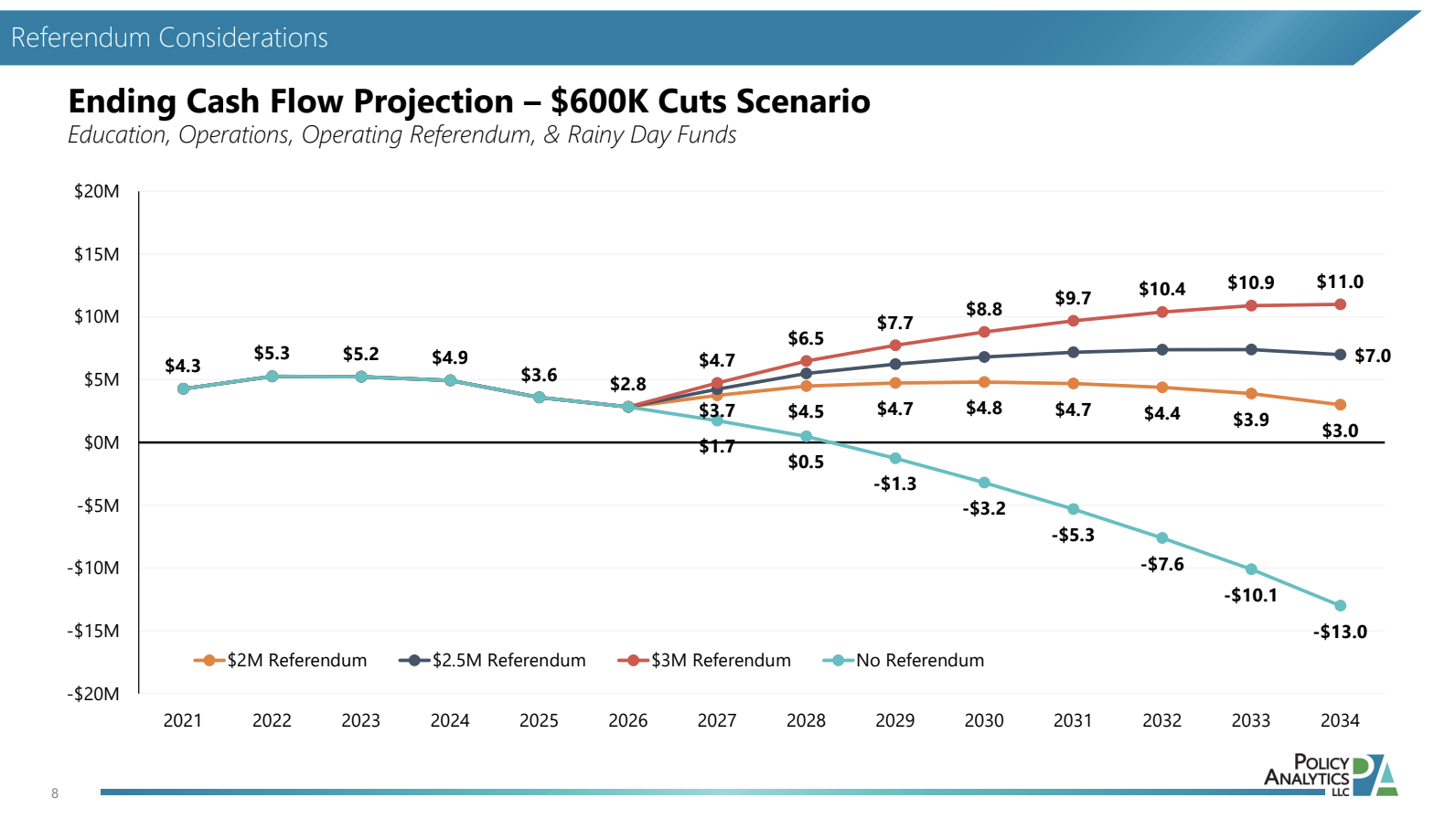
Current Financial Conditions and Long Term Outlook
Elwood Community Schools has adapted its financial strategies to stretch limited resources without compromising educational quality. Examples include:
- Strategic use of federal Title I, II, IV, and High Ability funds to support staffing, instructional materials, professional development, and student supports
- Shared service models, such as participation in the Hinds Career Center, allowing students access to high cost career and technical education programs without duplicating expenses
- Aggressive pursuit of grants and partnerships to offset local costs
- Technology efficiencies, including E Rate funding covering approximately 80 percent of network and internet infrastructure costs
While these approaches have been effective, many of these funding sources are temporary or restricted in how they can be used. Operating costs such as staffing, transportation, utilities, and instructional support continue to increase faster than state funding.
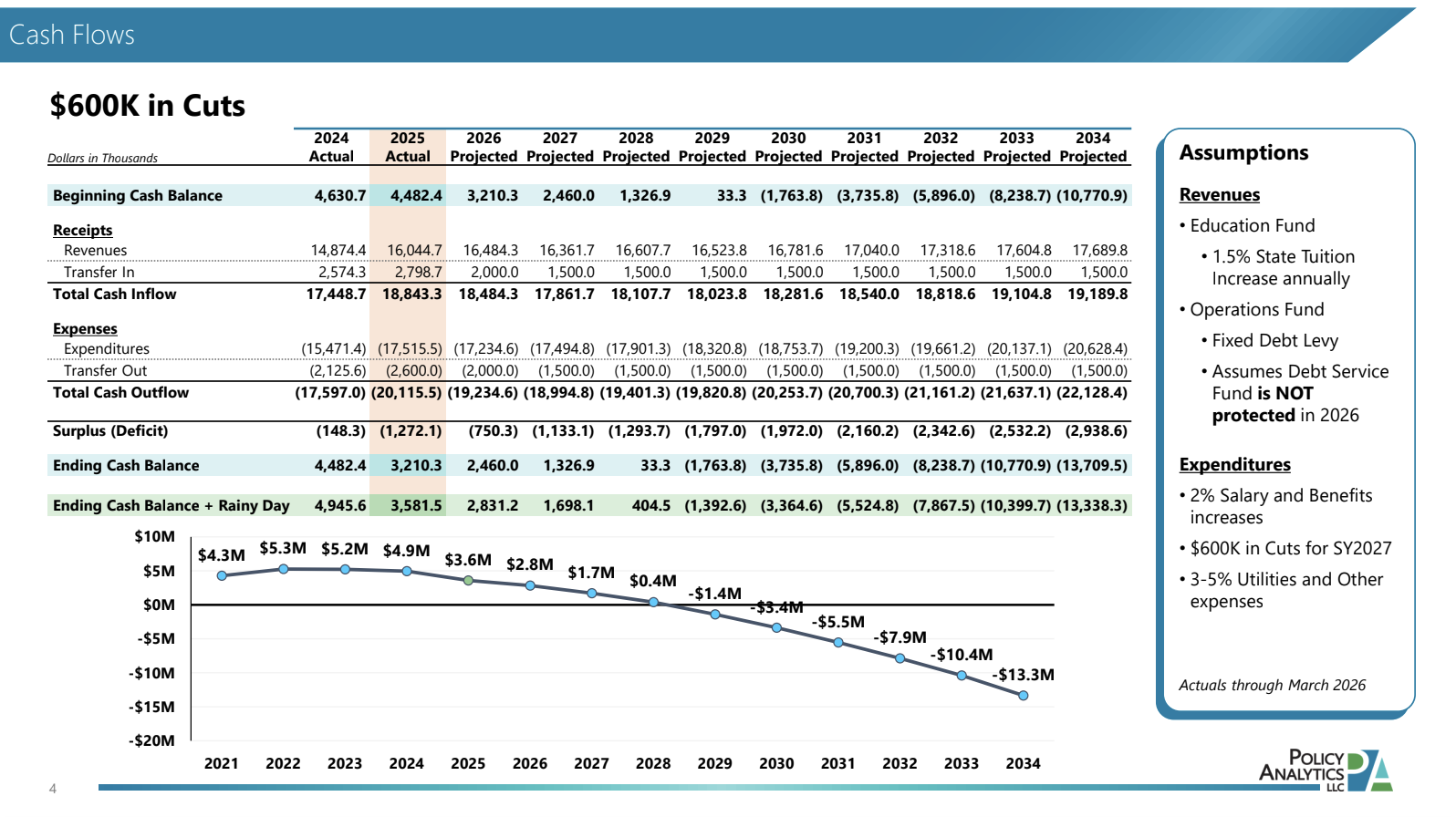
Expenditure History
How Would Operating Referendum Funds Be Used?
Sustaining Programs
This includes programs such as Hinds Career Center, where students earn industry-recognized certifications and receive hands-on training in skilled trades.
Transportation
This includes all bus transportation within the community to both school and extra-curricular activities.
Safety & Security
School safety initiatives, including employing an SRO, which provides security to the school community.
What Happens If the Referendum Is Not Approved?
Without an operating referendum, Elwood Community Schools would be required to further reduce expenses to align with available funding.
Potential impacts may include:
- Fewer course offerings or extracurricular opportunities
- Reduced access to career and college readiness programs
- Fewer student support services
- Larger class sizes
- Difficulty attracting and retaining high quality teachers and staff
- Potential reductions in force over time
Transportation is a major operational expense. Without additional funding, the district may need to evaluate:
- Route reductions or consolidations
- Delays in bus replacement cycles
- Increased wear and tear on existing buses
What will the referendum cost?
The actual cost of the operating referendum varies depending on the assessed value of a property.
This calculator allows residents to enter an estimated property value to see a general estimate of how the referendum may affect their annual property taxes.
The estimate is provided for informational purposes only and does not replace official tax statements.
Frequently Asked Questions
Because revenue limitations and rising costs are creating a structural gap that cannot be addressed through cuts alone.
No. Elwood Community Schools is not alone in facing these challenges. School districts across Indiana, including urban, suburban, and rural communities, are experiencing financial pressure tied to changes in state funding formulas, property tax structures, and rising operating costs. 38 Indiana school districts are placing operating referenda before voters this November, reflecting how widespread these challenges have become.
Yes. The district has taken steps to manage costs and prioritize essential programs.
Responsible Stewardship of Taxpayer Resources
Budget Management
Elwood Community Schools has adapted to financial constraints through careful planning, strategic use of available funding sources, and a focus on aligning resources with student needs. District leaders have leveraged federal funds to sustain staffing, instructional programs, and student supports, while also using enrollment trends, workforce demand, and program performance data to guide decisions. Shared services, education discounts, cybersecurity partnerships, and E-Rate funding have helped reduce operational costs while preserving educational quality. Together, these efforts reflect a disciplined approach to managing limited resources while protecting core services for students.
Cost Saving Measures
The district has implemented a range of cost saving measures designed to maintain financial stability without compromising educational opportunities. Federal funds have been strategically used to reduce pressure on the education fund, while investments in internal staff development have helped lower long term recruitment costs. District leaders also prioritize reviewing non-essential expenditures first, protecting classroom instruction and student support services whenever possible. These efforts reflect a consistent focus on stretching resources while maintaining strong academic programming.
Revenue Generation
The district has pursued alternative revenue sources to supplement traditional funding and reduce burdens on local taxpayers. Competitive grants, federal funding programs, cost-sharing partnerships, and collaborations with outside organizations have all contributed to expanding resources available to students. Partnerships such as those connected to career and technical education, as well as enrollment based arrangements that generate additional ADM revenue, demonstrate how the district is actively seeking creative ways to support programs and services beyond conventional funding streams.
Financial Planning and Forecasting
Long term financial planning at the district is guided by data, thoughtful forecasting, and a willingness to adjust as conditions change. Leaders regularly review enrollment trends, staffing patterns, equipment replacement cycles, and program viability to anticipate future needs. This planning process helps the district identify efficiencies, pursue outside funding opportunities, and make proactive decisions that support students while managing uncertainty in state and local funding.
Impact of Financial Decisions
District leaders recognize that financial decisions have a direct impact on students, staff, and educational outcomes. Budget decisions influence class sizes, staffing levels, instructional opportunities, and access to student supports. At the same time, strategic financial choices have helped expand access to dual credit, industry certifications, and career pathways that benefit students and families. These decisions reflect an understanding that sound financial management is not separate from student success, but closely tied to it.
Innovation in Financial Management
Innovation has been a key part of the district’s approach to doing more with less. Through shared service models, strategic grant use, business partnerships, and creative staffing approaches, the district has adopted practices that improve efficiency while sustaining opportunities for students. These efforts show that financial innovation is not simply about reducing costs, but about finding smarter ways to deliver value, protect programs, and support long term success.